by: Brian Lerch
Late last night I was flipping through channels and came across an
excerpt of this animated video from 1948. Luckily, the entire video is
on Youtube, so we can all see the whole thing. Not only does the video
do a great job of explaining the virtues of our free market system, it
warns of the dangers of big government in a way that not enough on our
side do today. Those who wish for the government to take care of them
should realize they are oftentimes signing away their lives to hucksters
who only wish to control them. Pay close attention to the 20 seconds
between 8:30 and 8:50. They were talking about Barack Obama- they just
didn’t know it at the time. So, take about 10 minutes out of your day
and give it a view. It’s worth it
Conservatives 4 Palin
Thursday, December 5, 2013
Sunday, December 1, 2013
Morality, Anti-Morality, and Socialism
December 1, 2013
By Deborah C. Tyler
American life gives individuals the chance to make two kinds of personal choices. Structural choices are the big decisions that configure the course of life and involve significant risk and responsibility -- when to marry, how to support oneself and dependents, where to live. They tend to be made after conscious consideration of alternatives. Functional choices are the everyday decisions such as what words to speak, how to behave towards others, what to eat, and wear. Functional choices tend to be made more or less unconsciously, according to tastes and preferences, without deep consideration of alternatives.
Since the founding of America, personal choice has been organized around the teachings of Judeo-Christian morality. But this psychology of personal choice has been upended by a vast reaction against the idea of morality itself. Today in America the psychological process of personal choice is influenced by anti-moral experimentalism, the end stage of which is socialism.
Morality
A consensual moral code is an integrated body of knowledge taught to children and used by adults as a guide to personal choice. The purpose of morality is to curb selfishness in choice. The American moral code is founded upon the common teachings of the Judeo-Christian religions and comprises three sets of teachings: 1) God-given directives that either require or forbid certain behaviors; 2) psychological attributes called vices; and 3) psychological attributes called virtues.
First, morality encompasses religious statutes and commandments. Second, it concerns aspects of selfishness called vice: pride, lust, anger, greed, jealousy, hatred, and envy. It teaches recognizing and suppressing these tendencies in oneself. Morality teaches that even biological reactions necessary for survival, like anger and sexual lust, create moral vulnerabilities that are to be transcended. Third, the moral code includes virtues, or psychological attributes of selflessness, which are taught by all the Judeo-Christian religions. For example, from the Catholic catechism: chastity; temperance, charity, diligence, patience, kindness, humility. (For some reason, vices and virtues are enumerated in sets of seven.) Morality is the expression of these attributes through virtuous choices.
Prior to the mid-twentieth century, American law, literature, social convention, and popular culture tended to inculcate the tripartite moral code. Moral structural choices tended to be made consciously in light of religion, and moral functional choices were influenced by an ingrained awareness of vice and virtue.
A consensual moral code involves penalty and loss for transgression. While punishment has lightened -- scarlet letters and stocks in the public square went out with those funny collars -- in the early 20th century people whose structural choices violated the moral code might still be shunned or socially restricted. On the level of functional choice, people who behaved in an aggressive, lazy, vulgar or lewd manner were liable to be censured by family and society, and lose their chances for a good life.
Because of the multicultural nature of American society, a consensual moral code has been the glue holding America together and has been indispensable for the functioning and defense of the Republic. Without a moral framework, the only force in society which restrains harmfulness is the law. The weakening of the moral code is why people today call the police for everything. The "greatest generation" was really only the last generation of Americans who were taught the same moral code; and as the unifying power of consensual morality diminishes, America declines.
Anti-Morality
The rise of anti-morality has been the most transformational psychological shift in American history, but it is not recognized as such. Anti-morality should not be confused with amorality or immorality. It is the affirmative belief that an enforced moral code diminishes individual potential and power. Anti-morality is a reaction against the belief that selfishness is the primary cause of suffering. According to anti-moral beliefs, suffering arises not from selfish choices, but when a person is blocked from "self-actualization" by restrictive and oppressive social conditions. Anti-morality is the belief that morally based discrimination and penalty are narrow-minded, bigoted, and thwart freedom.
What caused anti-morality to take hold in America? Some call these the "end of days" when cruelty and vice reign. Also, immorality historically increases in wealthy societies as affluence makes moral regulation less necessary for survival. The shift away from personal choice based on morality was also abetted when electronic mass media became the dominant source of cultural conditioning. Morality cannot be enforced through television or computers.
Anti-morality is an unintended consequence of 20th-century humanism. The central tenet of humanism is that personal choice be directed toward the goal of self-actualization. Abraham Maslow and the humanistic psychology movement put forth the ideal of life as a permanent process of finding and becoming oneself.
Humanism offers no basis for a consensual moral code. Personal choice is made through a process of experimentalism. Structural choices are made by posing questions: What will work for me? What will actualize my identity? What am I ready for? Functional choices are made according to what feels good and asserts the personality.
There is no shame, guilt, or personal responsibility in humanist experimentalism. If a choice appears to work out badly the experimenter says, "I learned a lot," and moves on. Wreckage left behind is part of the journey of self-discovery.
An unintended consequence of anti-moral humanism has been the unleashing of selfishness. Freedom in all its forms is dependent on the moral integrity of a society. The ascendency of anti-morality is why the family, the free market, and the military are all in decline, and opiates are the religion of the masses.
Humanist experimentalism is not threatened by belief in God, but it can't abide morality. Anti-morality can include a belief in a deity who is like a personal coach, helpful in choosing experiments, but not a God of law and judgement. Many experimentalists believe they are very moral, and pride themselves on following a less judgmental morality. This is self-delusion. No matter how much angst one brings to the question, "What will work for me?" humanist experimentalism remains a process of following your own lights, a lantern carried by a blind man.
Progressivism is the fear that someone, somewhere is behaving morally. As anti-morality flourishes, its mouthpieces become more abusive to anyone they believe typifies morality, as it becomes more difficult for them to repress their own sense of shame.
Anti-morality is why the education of children no longer focuses on examples of virtue but emphasizes self-esteem. A strong sense of self is necessary to make self-actualizing personal choices. It doesn't matter if George Washington told the truth when he chopped down the cherry tree. The question is how did he feel about chopping down the tree? Would he chop it down again? It doesn't matter that the tree is dead, as long as he learned something from the experience.
Socialism
Socialism is the endgame of anti-morality. When Abraham Maslow introduced the term "self-actualization" in 1943, he did not foresee the paradox that the ideal of freedom from stifling convention would undermine moral responsibility and pave the way for socialist tyranny in America. Socialism obviates morality in personal choice and replaces it with the pathetic fallacy of virtuous government. Governments cannot be virtuous, only people and dogs can.
Socialism encourages venality and corruption because it operates on the level of law, not morality. American socialism encourages people to contribute as little as possible while taking everything they can get -- inevitably less than what virtuous effort can earn in a free-market economy. In Soviet socialism everybody had to work, but American socialism rewards people for the structural choices not to work, not to marry, not to raise and educate their own children.
During the ObamaCare enslavement, Speaker Pelosi made a statement of utmost dopiness, which captures the essence of humanist anti-morality. She said to the effect that if young people had government healthcare they would be freed to be artists and musicians. It expresses the delusion that self-actualization means being an artist, and implicitly denigrates most work and the virtue of diligence. If everyone is to be a government-supported artist, who is left to make things, to raise children, to pay the bills? In other words, socialism works until you run out of other people's morality.
By Deborah C. Tyler
American life gives individuals the chance to make two kinds of personal choices. Structural choices are the big decisions that configure the course of life and involve significant risk and responsibility -- when to marry, how to support oneself and dependents, where to live. They tend to be made after conscious consideration of alternatives. Functional choices are the everyday decisions such as what words to speak, how to behave towards others, what to eat, and wear. Functional choices tend to be made more or less unconsciously, according to tastes and preferences, without deep consideration of alternatives.
Since the founding of America, personal choice has been organized around the teachings of Judeo-Christian morality. But this psychology of personal choice has been upended by a vast reaction against the idea of morality itself. Today in America the psychological process of personal choice is influenced by anti-moral experimentalism, the end stage of which is socialism.
Morality
A consensual moral code is an integrated body of knowledge taught to children and used by adults as a guide to personal choice. The purpose of morality is to curb selfishness in choice. The American moral code is founded upon the common teachings of the Judeo-Christian religions and comprises three sets of teachings: 1) God-given directives that either require or forbid certain behaviors; 2) psychological attributes called vices; and 3) psychological attributes called virtues.
First, morality encompasses religious statutes and commandments. Second, it concerns aspects of selfishness called vice: pride, lust, anger, greed, jealousy, hatred, and envy. It teaches recognizing and suppressing these tendencies in oneself. Morality teaches that even biological reactions necessary for survival, like anger and sexual lust, create moral vulnerabilities that are to be transcended. Third, the moral code includes virtues, or psychological attributes of selflessness, which are taught by all the Judeo-Christian religions. For example, from the Catholic catechism: chastity; temperance, charity, diligence, patience, kindness, humility. (For some reason, vices and virtues are enumerated in sets of seven.) Morality is the expression of these attributes through virtuous choices.
Prior to the mid-twentieth century, American law, literature, social convention, and popular culture tended to inculcate the tripartite moral code. Moral structural choices tended to be made consciously in light of religion, and moral functional choices were influenced by an ingrained awareness of vice and virtue.
A consensual moral code involves penalty and loss for transgression. While punishment has lightened -- scarlet letters and stocks in the public square went out with those funny collars -- in the early 20th century people whose structural choices violated the moral code might still be shunned or socially restricted. On the level of functional choice, people who behaved in an aggressive, lazy, vulgar or lewd manner were liable to be censured by family and society, and lose their chances for a good life.
Because of the multicultural nature of American society, a consensual moral code has been the glue holding America together and has been indispensable for the functioning and defense of the Republic. Without a moral framework, the only force in society which restrains harmfulness is the law. The weakening of the moral code is why people today call the police for everything. The "greatest generation" was really only the last generation of Americans who were taught the same moral code; and as the unifying power of consensual morality diminishes, America declines.
Anti-Morality
The rise of anti-morality has been the most transformational psychological shift in American history, but it is not recognized as such. Anti-morality should not be confused with amorality or immorality. It is the affirmative belief that an enforced moral code diminishes individual potential and power. Anti-morality is a reaction against the belief that selfishness is the primary cause of suffering. According to anti-moral beliefs, suffering arises not from selfish choices, but when a person is blocked from "self-actualization" by restrictive and oppressive social conditions. Anti-morality is the belief that morally based discrimination and penalty are narrow-minded, bigoted, and thwart freedom.
What caused anti-morality to take hold in America? Some call these the "end of days" when cruelty and vice reign. Also, immorality historically increases in wealthy societies as affluence makes moral regulation less necessary for survival. The shift away from personal choice based on morality was also abetted when electronic mass media became the dominant source of cultural conditioning. Morality cannot be enforced through television or computers.
Anti-morality is an unintended consequence of 20th-century humanism. The central tenet of humanism is that personal choice be directed toward the goal of self-actualization. Abraham Maslow and the humanistic psychology movement put forth the ideal of life as a permanent process of finding and becoming oneself.
Humanism offers no basis for a consensual moral code. Personal choice is made through a process of experimentalism. Structural choices are made by posing questions: What will work for me? What will actualize my identity? What am I ready for? Functional choices are made according to what feels good and asserts the personality.
There is no shame, guilt, or personal responsibility in humanist experimentalism. If a choice appears to work out badly the experimenter says, "I learned a lot," and moves on. Wreckage left behind is part of the journey of self-discovery.
An unintended consequence of anti-moral humanism has been the unleashing of selfishness. Freedom in all its forms is dependent on the moral integrity of a society. The ascendency of anti-morality is why the family, the free market, and the military are all in decline, and opiates are the religion of the masses.
Humanist experimentalism is not threatened by belief in God, but it can't abide morality. Anti-morality can include a belief in a deity who is like a personal coach, helpful in choosing experiments, but not a God of law and judgement. Many experimentalists believe they are very moral, and pride themselves on following a less judgmental morality. This is self-delusion. No matter how much angst one brings to the question, "What will work for me?" humanist experimentalism remains a process of following your own lights, a lantern carried by a blind man.
Progressivism is the fear that someone, somewhere is behaving morally. As anti-morality flourishes, its mouthpieces become more abusive to anyone they believe typifies morality, as it becomes more difficult for them to repress their own sense of shame.
Anti-morality is why the education of children no longer focuses on examples of virtue but emphasizes self-esteem. A strong sense of self is necessary to make self-actualizing personal choices. It doesn't matter if George Washington told the truth when he chopped down the cherry tree. The question is how did he feel about chopping down the tree? Would he chop it down again? It doesn't matter that the tree is dead, as long as he learned something from the experience.
Socialism
Socialism is the endgame of anti-morality. When Abraham Maslow introduced the term "self-actualization" in 1943, he did not foresee the paradox that the ideal of freedom from stifling convention would undermine moral responsibility and pave the way for socialist tyranny in America. Socialism obviates morality in personal choice and replaces it with the pathetic fallacy of virtuous government. Governments cannot be virtuous, only people and dogs can.
Socialism encourages venality and corruption because it operates on the level of law, not morality. American socialism encourages people to contribute as little as possible while taking everything they can get -- inevitably less than what virtuous effort can earn in a free-market economy. In Soviet socialism everybody had to work, but American socialism rewards people for the structural choices not to work, not to marry, not to raise and educate their own children.
During the ObamaCare enslavement, Speaker Pelosi made a statement of utmost dopiness, which captures the essence of humanist anti-morality. She said to the effect that if young people had government healthcare they would be freed to be artists and musicians. It expresses the delusion that self-actualization means being an artist, and implicitly denigrates most work and the virtue of diligence. If everyone is to be a government-supported artist, who is left to make things, to raise children, to pay the bills? In other words, socialism works until you run out of other people's morality.
American Thinker


The Laughable Liberal 'Moral Imperative'
December 1, 2013
By Trevor Thomas

Here the liberals go again: trying with all their might to prop up an increasingly unpopular piece of legislation. This time, no less than Robert Reich has attempted to take the "moral" high road and claim that there is a "moral imperative" to ObamaCare.
Reich noted that recently he heard a young man express that he would rather pay a penalty than be forced by law to purchase health insurance. According to Reich, the young man asked, "Why should I pay for the sick and the old?" Reich's answer is telling: "The answer is he has a responsibility to do so, as a member the same society they inhabit."
When explaining why "richer people" have to pay higher taxes to finance health insurance for lower-income Americans, Reich concludes, "It's only just that those with higher incomes bear some responsibility for maintaining the health of Americans who are less fortunate." Did you catch that? A liberal exclaiming that "it's only just" when explaining his plans for wealth redistribution.
Reich complains that Democrats have not properly made the argument in favor of redistribution. "This is a profoundly moral argument about who we are and what we owe each other as Americans," he declares. Reich even goes so far as to lament that redistribution has become so "unfashionable" that it's just easier to say "everyone comes out ahead."
So redistribution of wealth by our benevolent federal government is not only moral, but "profoundly moral" -- so much so that it's okay to deceive the public at large about what is really happening. (Democrats are getting quite good at that.) Because, you see, as Reich puts it, "there would be no reason to reform and extend health insurance to begin with if we did not have moral obligations to one another as members of the same society."
As you see, multiple times Reich makes a moral (almost desperate, it seems) appeal in favor of ObamaCare and the redistribution of wealth that it requires. Of course, moral arguments to support their Big Government programs open up so many possibilities. To begin with, to what moral code is Reich appealing?
As is typical with so many liberals and their similar arguments, he never does say. Perhaps it's just assumed that everyone thinks that providing health care for those in need is the "just" or "responsible" thing to do as "members of the same society." However, not so long ago, the "responsible" thing to do was for men and women to get married before they decided to make babies.
Not so long ago, to kill a child in the womb was considered a terrible act of injustice. Now the "responsible" thing is to allow people to end the lives of all those unwanted children.
Not so long ago, no sane person would have thought that marriage was anything but a union of one man and one woman. And for that matter, not so long ago, homosexual behavior was considered immoral and something that needed to be cured. Today, the "just" thing to do is to allow people to live their lives any way they choose, no matter the old moral standards or the consequences, because "love is love."
Whether Reich, or Nancy Pelosi, or Harry Reid, or Jim Wallis, or Obama himself, and whether the issue is health care, marriage, abortion, climate change, or education, time and again, liberals attempt to make moral arguments in favor of their big-government liberal worldview.
Yet if conservatives attempt the same, we are "forcing our morality" on others, or we are attempting to "legislate morality." In fact, such accusation has been leveled so often that even some conservatives have started to believe it. Speaking to young libertarians earlier this year, GOP representative Justin Amash said, "We can't legislate morality and force everyone to agree with us."
Bill O'Reilly called those of us who oppose same-sex marriage on biblical grounds Bible-thumpers. He went so far as to say, "If you're going to stand up for heterosexual marriage, and exclude gay marriage -- if you're going to do that, you've gotta do it outside the Bible. You can't cite the Bible, because you'll lose if you do." Yet, as I have noted before (see the links above), liberals will often cite the Bible to further their big-government agenda, and the media barely bats an eye.
It's time for the moral double standard to stop. It's time for the media and pundits across the political spectrum to see that both sides -- liberal and conservative -- are making moral arguments when pushing their respective agendas. All that needs to be decided is by whose morality we want to be governed: a morality that is rooted and grounded in absolute truth or one that is guided by whatever political winds seem to be prevalent at the time.
By Trevor Thomas

Here the liberals go again: trying with all their might to prop up an increasingly unpopular piece of legislation. This time, no less than Robert Reich has attempted to take the "moral" high road and claim that there is a "moral imperative" to ObamaCare.
Reich noted that recently he heard a young man express that he would rather pay a penalty than be forced by law to purchase health insurance. According to Reich, the young man asked, "Why should I pay for the sick and the old?" Reich's answer is telling: "The answer is he has a responsibility to do so, as a member the same society they inhabit."
When explaining why "richer people" have to pay higher taxes to finance health insurance for lower-income Americans, Reich concludes, "It's only just that those with higher incomes bear some responsibility for maintaining the health of Americans who are less fortunate." Did you catch that? A liberal exclaiming that "it's only just" when explaining his plans for wealth redistribution.
Reich complains that Democrats have not properly made the argument in favor of redistribution. "This is a profoundly moral argument about who we are and what we owe each other as Americans," he declares. Reich even goes so far as to lament that redistribution has become so "unfashionable" that it's just easier to say "everyone comes out ahead."
So redistribution of wealth by our benevolent federal government is not only moral, but "profoundly moral" -- so much so that it's okay to deceive the public at large about what is really happening. (Democrats are getting quite good at that.) Because, you see, as Reich puts it, "there would be no reason to reform and extend health insurance to begin with if we did not have moral obligations to one another as members of the same society."
As you see, multiple times Reich makes a moral (almost desperate, it seems) appeal in favor of ObamaCare and the redistribution of wealth that it requires. Of course, moral arguments to support their Big Government programs open up so many possibilities. To begin with, to what moral code is Reich appealing?
As is typical with so many liberals and their similar arguments, he never does say. Perhaps it's just assumed that everyone thinks that providing health care for those in need is the "just" or "responsible" thing to do as "members of the same society." However, not so long ago, the "responsible" thing to do was for men and women to get married before they decided to make babies.
Not so long ago, to kill a child in the womb was considered a terrible act of injustice. Now the "responsible" thing is to allow people to end the lives of all those unwanted children.
Not so long ago, no sane person would have thought that marriage was anything but a union of one man and one woman. And for that matter, not so long ago, homosexual behavior was considered immoral and something that needed to be cured. Today, the "just" thing to do is to allow people to live their lives any way they choose, no matter the old moral standards or the consequences, because "love is love."
Whether Reich, or Nancy Pelosi, or Harry Reid, or Jim Wallis, or Obama himself, and whether the issue is health care, marriage, abortion, climate change, or education, time and again, liberals attempt to make moral arguments in favor of their big-government liberal worldview.
Yet if conservatives attempt the same, we are "forcing our morality" on others, or we are attempting to "legislate morality." In fact, such accusation has been leveled so often that even some conservatives have started to believe it. Speaking to young libertarians earlier this year, GOP representative Justin Amash said, "We can't legislate morality and force everyone to agree with us."
Bill O'Reilly called those of us who oppose same-sex marriage on biblical grounds Bible-thumpers. He went so far as to say, "If you're going to stand up for heterosexual marriage, and exclude gay marriage -- if you're going to do that, you've gotta do it outside the Bible. You can't cite the Bible, because you'll lose if you do." Yet, as I have noted before (see the links above), liberals will often cite the Bible to further their big-government agenda, and the media barely bats an eye.
It's time for the moral double standard to stop. It's time for the media and pundits across the political spectrum to see that both sides -- liberal and conservative -- are making moral arguments when pushing their respective agendas. All that needs to be decided is by whose morality we want to be governed: a morality that is rooted and grounded in absolute truth or one that is guided by whatever political winds seem to be prevalent at the time.
American Thinker
Friday, November 29, 2013
Is Health Care A Fundamental Human Right or a Service?
By Dr. Ileana Johnson Paugh
How many Americans believe that health care is a fundamental human right? How many Americans believe that it is just a service that must be paid for just like any other service? Good doctors and nurses who train a long time and invest a lot of money in their education expect to be paid well for their expertise and unique skills.
Respectable hospitals cannot operate on the basis of a “fundamental human right,” invented by “progressives,” somebody must pay for health care. Life-saving medical equipment and drugs are expensive.
There is a reason why the best medical care, equipment, drugs, and doctors in the world exist in capitalism and not in socialist countries. Individual thinking, creativity, and entrepreneurship rewarded by profit have improved our lives and our health. Collectivism resulted in the death of 100 million individuals. Developing each drug cost at least $950 million and researchers and investors expect to be paid for their financial risks, research, and ideas.
Americans have always supported the development of life-saving expensive drugs which were then sold to other nations for much less than we paid at home or were given away for free. Americans have thus subsidized the medical treatment of citizens of many nations.
Hospitals have charged patients with insurance more to cover expenses for those who did not, could not pay their bills, or had no insurance, such as illegal aliens. Quite a few smaller hospitals have closed their doors for that reason alone.
It is true, some people who get sick and have no health care can die. It is also true that without food people also die. Is food then a “fundamental human right?” Someone must toil so that somebody else eats for free?
If you ask “progressives,” everything should be free and nobody should make a profit because profit is “obscene and socially unjust.” Yet taxation from capitalist profit and from income earned supports able-bodied
Americans and illegal aliens who choose not to work, work undocumented, or cannot find a job thanks to the current depressed economy. At some point the golden goose is going to run out of golden eggs. As Margaret Thatcher said, the problem with socialism is that you run out of other people’s money.
Public Citizen, in a recent fund raising memo asking potential donors for $5, says that ObamaCare’s problem is not the broken website (the obscene development cost of $693 million, all the lies and misrepresentations of premium costs, keeping your doctors, keeping your insurance, lower premiums, etc.), the problem is that “we spend more on health care per person, by far, than any other developed country, yet millions and millions of our citizens are left without insurance, leading to 45,000 preventable deaths every year.”
The statement is not exactly accurate. A study of 9,005 individuals who answered questions about race, ethnicity, income, and household size was reported in December 2009 in the American Journal of Public Health. These respondents self-evaluated their health and were examined by doctors. The study “oversampled several groups, including Black persons, Mexican Americans, the very young (aged 2 months to 5 years) and those aged older than 65 years.”
Based on sound scientific research, the study contains numerous biases and is hardly a representative sampling of the uninsured U.S. population.
The study concludes, “Lack of health insurance is associated with as many as 44,789 deaths per year in the United States, more than those caused by kidney disease.” Notice the use of the word “associated with,” it does not say “caused” death. There is a significant difference.
The very idea that medical insurance guarantees prompt, timely, excellent medical care, health, and a good outcome (life), is preposterous.
The fact that socialized medicine does cause severe shortages and forces rationing to reduce costs, thus causing patient deaths by neglect and denial of services seems to escape those who are so eager to institute socialized medicine in this country.
The CDC does say that 200,000 deaths per year from heart disease and stroke are preventable.
The NIH says that preventable causes of death in the U.S. are associated with diet, lifestyle, and metabolic rate.
ObamaCare has already left millions of formerly insured Americans uninsured because the law mandates many more services that insurance companies cannot cover without raising premiums or dropping those already insured. It is simple economics, something that liberals must have slept through in high school and college.
At the end of the full implementation of ObamaCare more Americans will be left without insurance coverage or dependent on Medicaid than the initial 15 percent who were uninsured before ObamaCare was passed.
Most Americans were satisfied with their excellent health care, the envy of the rest of the world, and their insurance. About 15 percent were uninsured, young people who chose to play insurance roulette based on age, good health, a sense of immortality, and those unfortunate Americans who could not afford the higher premiums based on their low incomes, pre-existing conditions, and those who were canceled by their insurance.
A cheaper solution would have been to offer federally subsidized insurance to those 15 percent who were uninsured. It would have been much cheaper than ObamaCare.
Public Citizen considers the situation outrageous that capitalism “still permits the for-profit health insurance industry to decide who can or cannot see a doctor and to commodify a fundamental human right.”
Who should then decide? The federal government, of course, because they do everything else so precisely.
Government care worked really well in Cuba, Venezuela, and Eastern Europe where socialist/communist governments decided who got medical care, what type, how much training doctors had, how much they could earn, where they could practice medicine, how much rationing occurred, who lived and died, and how well the communist elites were treated in their private hospitals.
Public Citizen is telling the low information voters that “Our citizens need – and morality demands – a single-payer, Medicare-for-All system.” Who knew that morality demanded health care? And who decides the definition of morality? Is it the government or the enlightened “progressives”?
ObamaCare was never about insuring the 15 percent uninsured, it was about control over our bodies, about impoverishing and making dependent on government those already insured, bankrupting the insurance companies, and establishing one national single-payer system run by the IRS and HHS. What can possibly go wrong with such a plan?
“Helping people when they are sick or injured should not be an industry, like manufacturing lint rollers or windshields,” says Public Citizen. Yet the national health care system in the U.K. is the largest employer. It seems to me that it is an industry, an industry that is run very badly, in which severe rationing occurs and procedural waiting time for ER admissions, tests, hospitalizations, and surgeries is very long. The survivability rate from all forms of cancer is much lower than in the U.S.
Nationalized health care works well for sniffles but not for serious problems, expensive procedures, and surgery. One-payer system is very expensive and requires much higher taxes than Americans currently pay.
Public Citizen promises its $5 donors that “it will derail attempts to cut Medicare.” That will be interesting to see especially since the Obama administration is cutting $719 billion from Medicare in the next 10 years in order to fund ObamaCare.
Public Citizen is working with Senator Bernie Sanders, a self-described democratic socialist, and Representative John Conyers to “boost legislative momentum for single-payer reform.” The plan is called “Medicare-for-All.” It will ensure every American’s basic right to health care, saving 45,000 lives every year” and “saving our country $350 billion or more annually.” I am not sure how they arrived at this figure but it does not matter, low information voters are easy to convince.
Unless single-payer Medicare-for-All happens, said the President of Public Citizen, our society cannot “progress out of this dark chapter in our national story where we allow 120 of our fellow citizens to die every day so that for-profit insurance industry can perpetuate its profiteering.”
I wonder how many people will die once the full implementation of ObamaCare happens and the 15-member death panel is in full force. How many people will be denied procedures based on their age, usefulness to society, disability, political affiliation, ethnicity, religion, and race?
According to Heritage Foundation, ObamCare’s new exchanges actually offer very limited choices, premiums are more expensive for Americans in at least 42 states, and the Congressional Budget Office (CBO) projects that 7 million people with employer-sponsored coverage will lose their insurance due to ObamaCare.
“ObamaCare undermines American values by discouraging marriage and work.” Worse yet, ObamaCare prioritizes illegal aliens over American citizens and able-bodied adults over the disabled. Legal, non-citizen residents qualify for federally subsidized insurance with more and better coverage options than American citizens. (Morning Bell, The Heritage Foundation, November 27, 2013)
States that expanded Medicaid programs will automatically enroll in Medicaid Americans with incomes under 138 percent of the federal poverty level. But non-citizens will have better options via federal subsidies to purchase coverage in the ObamaCare exchanges.
To make matters worse, in some states, when a person who received lengthy medical treatment under Medicaid dies, the state goes after the remaining spouse’s assets in order to reimburse Medicaid.
States that did not expand Medicaid programs will offer non-citizens the option to purchase subsidized insurance in the exchanges, while American citizens below 100 percent of the poverty level will likely not qualify for subsidized coverage. (Morning Bell, The Heritage Foundation, November 27, 2013)
ObamaCare will spend $700 billion on Medicaid expansion in order to cover able-bodied individuals, millions of unemployed and underemployed, threatening coverage for disabled Americans, and creating a permanent class that has no financial incentive to work.
These people will become permanently dependent on government for every need. The sad truth is that what government gives generously, it can certainly take away. All we have to do is look at the sad state of Greece. Many citizens must depend on charities for serious medical treatment or face death.
Canada Free Press
How many Americans believe that health care is a fundamental human right? How many Americans believe that it is just a service that must be paid for just like any other service? Good doctors and nurses who train a long time and invest a lot of money in their education expect to be paid well for their expertise and unique skills.
Respectable hospitals cannot operate on the basis of a “fundamental human right,” invented by “progressives,” somebody must pay for health care. Life-saving medical equipment and drugs are expensive.
There is a reason why the best medical care, equipment, drugs, and doctors in the world exist in capitalism and not in socialist countries. Individual thinking, creativity, and entrepreneurship rewarded by profit have improved our lives and our health. Collectivism resulted in the death of 100 million individuals. Developing each drug cost at least $950 million and researchers and investors expect to be paid for their financial risks, research, and ideas.
Americans have always supported the development of life-saving expensive drugs which were then sold to other nations for much less than we paid at home or were given away for free. Americans have thus subsidized the medical treatment of citizens of many nations.
Hospitals have charged patients with insurance more to cover expenses for those who did not, could not pay their bills, or had no insurance, such as illegal aliens. Quite a few smaller hospitals have closed their doors for that reason alone.
It is true, some people who get sick and have no health care can die. It is also true that without food people also die. Is food then a “fundamental human right?” Someone must toil so that somebody else eats for free?
If you ask “progressives,” everything should be free and nobody should make a profit because profit is “obscene and socially unjust.” Yet taxation from capitalist profit and from income earned supports able-bodied
Americans and illegal aliens who choose not to work, work undocumented, or cannot find a job thanks to the current depressed economy. At some point the golden goose is going to run out of golden eggs. As Margaret Thatcher said, the problem with socialism is that you run out of other people’s money.
Public Citizen, in a recent fund raising memo asking potential donors for $5, says that ObamaCare’s problem is not the broken website (the obscene development cost of $693 million, all the lies and misrepresentations of premium costs, keeping your doctors, keeping your insurance, lower premiums, etc.), the problem is that “we spend more on health care per person, by far, than any other developed country, yet millions and millions of our citizens are left without insurance, leading to 45,000 preventable deaths every year.”
The statement is not exactly accurate. A study of 9,005 individuals who answered questions about race, ethnicity, income, and household size was reported in December 2009 in the American Journal of Public Health. These respondents self-evaluated their health and were examined by doctors. The study “oversampled several groups, including Black persons, Mexican Americans, the very young (aged 2 months to 5 years) and those aged older than 65 years.”
Based on sound scientific research, the study contains numerous biases and is hardly a representative sampling of the uninsured U.S. population.
The study concludes, “Lack of health insurance is associated with as many as 44,789 deaths per year in the United States, more than those caused by kidney disease.” Notice the use of the word “associated with,” it does not say “caused” death. There is a significant difference.
The very idea that medical insurance guarantees prompt, timely, excellent medical care, health, and a good outcome (life), is preposterous.
Socialized medicine does cause severe shortages and forces rationing to reduce costs
The fact that socialized medicine does cause severe shortages and forces rationing to reduce costs, thus causing patient deaths by neglect and denial of services seems to escape those who are so eager to institute socialized medicine in this country.
The CDC does say that 200,000 deaths per year from heart disease and stroke are preventable.
The NIH says that preventable causes of death in the U.S. are associated with diet, lifestyle, and metabolic rate.
ObamaCare has already left millions of formerly insured Americans uninsured because the law mandates many more services that insurance companies cannot cover without raising premiums or dropping those already insured. It is simple economics, something that liberals must have slept through in high school and college.
At the end of the full implementation of ObamaCare more Americans will be left without insurance coverage or dependent on Medicaid than the initial 15 percent who were uninsured before ObamaCare was passed.
Most Americans were satisfied with their excellent health care, the envy of the rest of the world, and their insurance. About 15 percent were uninsured, young people who chose to play insurance roulette based on age, good health, a sense of immortality, and those unfortunate Americans who could not afford the higher premiums based on their low incomes, pre-existing conditions, and those who were canceled by their insurance.
A cheaper solution would have been to offer federally subsidized insurance to those 15 percent who were uninsured. It would have been much cheaper than ObamaCare.
Public Citizen considers the situation outrageous that capitalism “still permits the for-profit health insurance industry to decide who can or cannot see a doctor and to commodify a fundamental human right.”
Who should then decide? The federal government, of course, because they do everything else so precisely.
Government care worked really well in Cuba, Venezuela, and Eastern Europe where socialist/communist governments decided who got medical care, what type, how much training doctors had, how much they could earn, where they could practice medicine, how much rationing occurred, who lived and died, and how well the communist elites were treated in their private hospitals.
Public Citizen is telling the low information voters that “Our citizens need – and morality demands – a single-payer, Medicare-for-All system.” Who knew that morality demanded health care? And who decides the definition of morality? Is it the government or the enlightened “progressives”?
ObamaCare was never about insuring the 15 percent uninsured, it was about control over our bodies, about impoverishing and making dependent on government those already insured, bankrupting the insurance companies, and establishing one national single-payer system run by the IRS and HHS. What can possibly go wrong with such a plan?
“Helping people when they are sick or injured should not be an industry, like manufacturing lint rollers or windshields,” says Public Citizen. Yet the national health care system in the U.K. is the largest employer. It seems to me that it is an industry, an industry that is run very badly, in which severe rationing occurs and procedural waiting time for ER admissions, tests, hospitalizations, and surgeries is very long. The survivability rate from all forms of cancer is much lower than in the U.S.
Nationalized health care works well for sniffles but not for serious problems, expensive procedures, and surgery. One-payer system is very expensive and requires much higher taxes than Americans currently pay.
Public Citizen promises its $5 donors that “it will derail attempts to cut Medicare.” That will be interesting to see especially since the Obama administration is cutting $719 billion from Medicare in the next 10 years in order to fund ObamaCare.
Public Citizen is working with Senator Bernie Sanders, a self-described democratic socialist, and Representative John Conyers to “boost legislative momentum for single-payer reform.” The plan is called “Medicare-for-All.” It will ensure every American’s basic right to health care, saving 45,000 lives every year” and “saving our country $350 billion or more annually.” I am not sure how they arrived at this figure but it does not matter, low information voters are easy to convince.
Unless single-payer Medicare-for-All happens, said the President of Public Citizen, our society cannot “progress out of this dark chapter in our national story where we allow 120 of our fellow citizens to die every day so that for-profit insurance industry can perpetuate its profiteering.”
I wonder how many people will die once the full implementation of ObamaCare happens and the 15-member death panel is in full force. How many people will be denied procedures based on their age, usefulness to society, disability, political affiliation, ethnicity, religion, and race?
According to Heritage Foundation, ObamCare’s new exchanges actually offer very limited choices, premiums are more expensive for Americans in at least 42 states, and the Congressional Budget Office (CBO) projects that 7 million people with employer-sponsored coverage will lose their insurance due to ObamaCare.
ObamaCare undermines American values by discouraging marriage and work
“ObamaCare undermines American values by discouraging marriage and work.” Worse yet, ObamaCare prioritizes illegal aliens over American citizens and able-bodied adults over the disabled. Legal, non-citizen residents qualify for federally subsidized insurance with more and better coverage options than American citizens. (Morning Bell, The Heritage Foundation, November 27, 2013)
States that expanded Medicaid programs will automatically enroll in Medicaid Americans with incomes under 138 percent of the federal poverty level. But non-citizens will have better options via federal subsidies to purchase coverage in the ObamaCare exchanges.
To make matters worse, in some states, when a person who received lengthy medical treatment under Medicaid dies, the state goes after the remaining spouse’s assets in order to reimburse Medicaid.
States that did not expand Medicaid programs will offer non-citizens the option to purchase subsidized insurance in the exchanges, while American citizens below 100 percent of the poverty level will likely not qualify for subsidized coverage. (Morning Bell, The Heritage Foundation, November 27, 2013)
ObamaCare will spend $700 billion on Medicaid expansion in order to cover able-bodied individuals, millions of unemployed and underemployed, threatening coverage for disabled Americans, and creating a permanent class that has no financial incentive to work.
These people will become permanently dependent on government for every need. The sad truth is that what government gives generously, it can certainly take away. All we have to do is look at the sad state of Greece. Many citizens must depend on charities for serious medical treatment or face death.
Canada Free Press
Wednesday, November 20, 2013
Women of MSNBC Silent on Martin Bashir's Palin Comments
20 Nov 2013

It has been a week since MSNBC's Martin Bashir took the network's hatred of Sarah Palin one step further with a sexist rant suggesting someone defecate and urinate into the former Alaska governor's mouth. Having apologized but received no discipline, his female colleagues on the network declined to comment on the network's inaction to Breitbart News today. Breitbart reached out directly to hosts Chris Jansing, Rachel Maddow, Abby Huntsman, Andrea Mitchell, Savannah Guthrie, Mika Brzezinski, Alex Wagner, Krystal Ball, and Alex Witt, as well as reporter Kelly O'Donnell, through a publicist, requesting comment on the continued lack of discipline Martin Bashir has enjoyed since making his comments regarding Palin. As of press time, none of MSNBC's talent has responded to our request, nor have they commented publicly on the matter.
The silence is deafening, especially compared to the backlash against those on the right that have outraged the network's talent in the past with far less obscene statements. MSNBC has been pivotal in forwarding a narrative of the Republican Party and the American right engaging in a "war on women" by expressing moral opposition to abortion and skepticism at the government interfering with women's health.
Those Breitbart News have reached out to, in particular, have not been hesitant in commenting when the offender has been a right-wing pundit rather than someone on the left. At the peak of the Sandra Fluke contraceptive media scandal, Rachel Maddow contended that radio host Rush Limbaugh did not understand birth control; Krystal Ball started an online petition and boycott campaign against Limbaugh; and Andrea Mitchell invited Fluke on her program to discuss her sympathetic phone call with President Obama.
In response to former Missouri Congressman Todd Akin's "legitimate rape" comments, Kelly O'Donnell tried to tie the Missouri Congressman to then Republican Vice Presidential candidate Paul Ryan by arguing that his comments resembled something in a bill Ryan was involved in writing, which included the term of art "forcible rape."
The women of MSNBC have been much quieter for Martin Bashir, despite his monologue distinguishing itself for introducing human waste into the conversation. While Bashir himself took the time to apologize for his "wholly unacceptable" comments, he has so far seen no discipline from the network for his comments. His apology came after widespread backlash from the greater conservative community, coverage by Breitbart News, and a petition on TruthRevolt. While Bashir's network immediately suspended colleague Alec Baldwin for his latest homophobic outburst against a photographer, they have yet to note whether Bashir will face a similar fate for words spoken on air.
While often maligned by the left as a divisive figure, Palin has a track record of reaching across the aisle when women in the public eye have become targets of sexist invective. In a recent interview with CNN's Jake Tapper, Palin argued that many of the attacks against Hillary Clinton during the 2008 campaign, especially those based on appearance, were the product of sexism. Some women on the left, most notably today former White House Press Secretary Dee Dee Myers, returned the favor, tweeting today that Martin Bashir has "gotta go" for his commentary.
SarahPAC, Palin's political action committee, is also still awaiting response from the network over whether they will discipline Bashir. In a letter written to administrators at MSNBC, they list a number of disciplinary actions by the network (including the firing of Don Imus for inappropriate words about the Rutgers women's basketball team and the recent Baldwin fiasco) and request an answer as to what Bashir's fate will be. This appears to be the only pressure on the network to react to such wholly unprofessional talk, however, as prominent feminist groups like NOW and the Feminist Majority stand out by their silence on the matter.
Big Journalism

It has been a week since MSNBC's Martin Bashir took the network's hatred of Sarah Palin one step further with a sexist rant suggesting someone defecate and urinate into the former Alaska governor's mouth. Having apologized but received no discipline, his female colleagues on the network declined to comment on the network's inaction to Breitbart News today. Breitbart reached out directly to hosts Chris Jansing, Rachel Maddow, Abby Huntsman, Andrea Mitchell, Savannah Guthrie, Mika Brzezinski, Alex Wagner, Krystal Ball, and Alex Witt, as well as reporter Kelly O'Donnell, through a publicist, requesting comment on the continued lack of discipline Martin Bashir has enjoyed since making his comments regarding Palin. As of press time, none of MSNBC's talent has responded to our request, nor have they commented publicly on the matter.
The silence is deafening, especially compared to the backlash against those on the right that have outraged the network's talent in the past with far less obscene statements. MSNBC has been pivotal in forwarding a narrative of the Republican Party and the American right engaging in a "war on women" by expressing moral opposition to abortion and skepticism at the government interfering with women's health.
Those Breitbart News have reached out to, in particular, have not been hesitant in commenting when the offender has been a right-wing pundit rather than someone on the left. At the peak of the Sandra Fluke contraceptive media scandal, Rachel Maddow contended that radio host Rush Limbaugh did not understand birth control; Krystal Ball started an online petition and boycott campaign against Limbaugh; and Andrea Mitchell invited Fluke on her program to discuss her sympathetic phone call with President Obama.
In response to former Missouri Congressman Todd Akin's "legitimate rape" comments, Kelly O'Donnell tried to tie the Missouri Congressman to then Republican Vice Presidential candidate Paul Ryan by arguing that his comments resembled something in a bill Ryan was involved in writing, which included the term of art "forcible rape."
The women of MSNBC have been much quieter for Martin Bashir, despite his monologue distinguishing itself for introducing human waste into the conversation. While Bashir himself took the time to apologize for his "wholly unacceptable" comments, he has so far seen no discipline from the network for his comments. His apology came after widespread backlash from the greater conservative community, coverage by Breitbart News, and a petition on TruthRevolt. While Bashir's network immediately suspended colleague Alec Baldwin for his latest homophobic outburst against a photographer, they have yet to note whether Bashir will face a similar fate for words spoken on air.
While often maligned by the left as a divisive figure, Palin has a track record of reaching across the aisle when women in the public eye have become targets of sexist invective. In a recent interview with CNN's Jake Tapper, Palin argued that many of the attacks against Hillary Clinton during the 2008 campaign, especially those based on appearance, were the product of sexism. Some women on the left, most notably today former White House Press Secretary Dee Dee Myers, returned the favor, tweeting today that Martin Bashir has "gotta go" for his commentary.
SarahPAC, Palin's political action committee, is also still awaiting response from the network over whether they will discipline Bashir. In a letter written to administrators at MSNBC, they list a number of disciplinary actions by the network (including the firing of Don Imus for inappropriate words about the Rutgers women's basketball team and the recent Baldwin fiasco) and request an answer as to what Bashir's fate will be. This appears to be the only pressure on the network to react to such wholly unprofessional talk, however, as prominent feminist groups like NOW and the Feminist Majority stand out by their silence on the matter.
Big Journalism
Sunday, November 17, 2013
'Racist' President Says Now You can Keep Your 'Substandard Insurance'
November 17, 2013
By Clarice Feldman

In ancient times were a ruler to have mismanaged everything as badly as has Obama, stonemasons would start gathering near the palace in anticipation of being hired to chisel the ruler's name and visage off all public buildings and temples, funerary garb purveyors would be spreading their wares out in the public square, and the top viziers would be stirring a special concoction for him to drink to bring his disastrous reign to a quick end.
We don't do things that way, so Obama, his party, and the country if not the world, will watch his power dissolve and the chaos he used to thrive on now overwhelm us all. We have, however, the -- to me -- happy pleasure of watching the arrogant press's favorite party face humiliating and ruinous exposure as know-nothings who lied, covered up, ignored normal legislative procedures, constitutional law, public sentiment, math, technology, and common sense.
Just a few days ago the president's defenders were calling his critics "racists" and claiming ObamaCare was merely allowing us to get rid of our "substandard health insurance" for better plans our betters, the Democrat leadership, thought we should have. Thursday he offered up a purported rollback fix announcing, incredibly "we are discovering that insurance is complicated to buy...."
His right-hand gal, the party's own Norma Desmond, Nancy Pelosi, about whom Joshua Sharf says: "I *am* big. It's my caucus that got small," is standing firm, though her caucus is running for the hills as waves of angry voters strike out.
The purported "fix" to allow voters to keep the insurance that the administration ordered them to cancel is so unworkable, the insurance commissioners of South Carolina and Washington State both turned the proposition down almost as soon as the president made it.
Even Howard Dean questioned whether the president can legally do this, though I don't recall him saying a word when this train wreck started down the track through procedures which ignored decades of Congressional practice and procedure and when the president tossed off waivers to his friends and allowed HHS to draft regulations that were directly in conflict with the promises he was repeatedly making to voters and even the clear language of the Act. (This, as his spokesmen were arguing that ObamaCare was "settled law" which could not be altered or repealed.)
More weighty than Dean's second thoughts, however, were those of legal scholars like Professor Eugene Kontorovich, a real constitutional law professor from Northwestern University (as opposed to Obama, the part-time lecturer at the University of Chicago).
But I believe the president's tardy apology for creating chaos in at least one-sixth of the U.S. economy is about as effective as the Syrian Al-Qaeda members who videoed an apology for beheading the wrong guy.
The poor man is dead. The apology is useless, and in that same way, the persons who lost their jobs, whose incomes were reduced, who face periods of time with no health insurance coverage of their choosing, who will face a larger tax burden, or who are committed to pay much higher premiums now, have suffered irretrievable losses. Some may even die as their treatment for serious health issues -- like cancer -- were suspended with the loss of their coverage.
Fouad Ajami compares Obama's rise and fall to those of a number of Middle Eastern rulers. He's seen this play about charismatic but incompetent leaders before:
American Thinker
By Clarice Feldman

In ancient times were a ruler to have mismanaged everything as badly as has Obama, stonemasons would start gathering near the palace in anticipation of being hired to chisel the ruler's name and visage off all public buildings and temples, funerary garb purveyors would be spreading their wares out in the public square, and the top viziers would be stirring a special concoction for him to drink to bring his disastrous reign to a quick end.
We don't do things that way, so Obama, his party, and the country if not the world, will watch his power dissolve and the chaos he used to thrive on now overwhelm us all. We have, however, the -- to me -- happy pleasure of watching the arrogant press's favorite party face humiliating and ruinous exposure as know-nothings who lied, covered up, ignored normal legislative procedures, constitutional law, public sentiment, math, technology, and common sense.
Just a few days ago the president's defenders were calling his critics "racists" and claiming ObamaCare was merely allowing us to get rid of our "substandard health insurance" for better plans our betters, the Democrat leadership, thought we should have. Thursday he offered up a purported rollback fix announcing, incredibly "we are discovering that insurance is complicated to buy...."
His right-hand gal, the party's own Norma Desmond, Nancy Pelosi, about whom Joshua Sharf says: "I *am* big. It's my caucus that got small," is standing firm, though her caucus is running for the hills as waves of angry voters strike out.
The purported "fix" to allow voters to keep the insurance that the administration ordered them to cancel is so unworkable, the insurance commissioners of South Carolina and Washington State both turned the proposition down almost as soon as the president made it.
Even Howard Dean questioned whether the president can legally do this, though I don't recall him saying a word when this train wreck started down the track through procedures which ignored decades of Congressional practice and procedure and when the president tossed off waivers to his friends and allowed HHS to draft regulations that were directly in conflict with the promises he was repeatedly making to voters and even the clear language of the Act. (This, as his spokesmen were arguing that ObamaCare was "settled law" which could not be altered or repealed.)
More weighty than Dean's second thoughts, however, were those of legal scholars like Professor Eugene Kontorovich, a real constitutional law professor from Northwestern University (as opposed to Obama, the part-time lecturer at the University of Chicago).
President Obama in his speech on "fixing" the Affordable Care Act today did not specify what statutory authority, if any, he thinks authorizes him to make such dictats. Given the gargantuan length of the ObamaCare statute, he might still be looking. Press reports say the President is claiming a broad "enforcement discretion."
It is true that the Chief Executive has some room to decide how strongly to enforce a law, and the timing of enforcement. But here, Obama is apparently suspending the enforcement of a law for a year -- simply to head off actual legislation not to his liking. Congress is working on legislation quite similar to the president's fix, but with differences he considers objectionable. This further demonstrates the primarily legislative nature of the fix.
Indeed, the fix goes far beyond "non-enforcement" because it requires insurers to certain new action to enjoy the delay. This is thus not simply a delay, but a new law.
The "fix" amounts to new legislation -- but enacted without Congress. The President has no constitutional authority to rewrite statutes, especially in ways that impose new obligations on people, and that is what the fix seems to entail. And of course, this is not the first such extra-statutory suspension of key ObamaCare provisions.
UPDATE: Here is the text of the administration's letter describing the fix.The legal problems are no bigger than the practical and political problems of Obamacare and the man who viewed this as his signature achievement:
Normally insurance companies take months to set up plans, negotiate with network providers, get state insurance commissioners to sign off on the proposed rates, and then do a bit of marketing. Now they have until December 15 for customers whose plans are cancelled as of Jan 1. But hey, don't blame Obamacare! It has only been the law for three years now; if insurance companies really thought it would go into effect and acted accordingly, well, psych!Experts indicate even the mechanical issue of the website will not -- cannot -- be fixed by Obama's latest promised date, December 1. See:
The well-documented critiques of the front-end and back-end software on HealthCare.gov beg the question of whether this critical site was properly designed -- or, even worse, designed at all.
It has been reported that the front end was designed with an agile process; unfortunately, most agile processes reject and discourage "big design up front." In a nutshell, many agile processes -- and especially extreme programming -- reject the big design phase as part and parcel of rejecting the waterfall methodology. Agile processes follow more of an "organic" software development, where developers start coding the smallest increment possible and "grow" the working software up, little by little, with constant customer feedback. These agile methodologies call for "user stories" to design each small increment of the system being developed. To be fair, agile can work for some software projects, but I assert that it is the kiss of death for projects with many moving parts, multiple organizations and complex interactions.And then there are the political issues, Pelosi's continued optimistic predictions aside. Kimberley Strassel lays out the devastating political wreckage facing the Democrats:
The primary purpose of the White House "fix" was to get out ahead of the planned Friday vote on Michigan Republican Fred Upton's "Keep Your Health Plan Act." The stage was set for dozens of Democrats to join with the GOP for passage --potentially creating a veto-proof majority, and putting enormous pressure on Senate Majority Leader Harry Reid to follow suit.
The White House couldn't risk such a bipartisan rebuke. Moreover, the Upton bill -- while it lacks those GOP joy words of "delay" or "repeal" -- poses a threat, since it would allow insurers to continue providing non-ObamaCare policies to any American who wants one. Democratic Sen. Mary Landrieu's version of the bill would in fact (unconstitutionally) order insurers to offer the plans in perpetuity. Both bills undermine the law's central goal of forcing healthy people into costly ObamaCare exchange plans that subsidize the sick.
The president's "fix" is designed to limit such grandfathering, but that's why it is of dubious political help to Democrats. Within minutes of Mr. Obama's announcement, several Democratic senators, including North Carolina's Kay Hagan -- whose poll numbers have plummeted in advance of her 2014 re-election bid -- announced that they remain in favor of Landrieu-style legislation.
And the White House "fix" doesn't save Democrats from having to take a vote on the Upton bill. A yes vote is a strike at the president and an admission that the law Democrats passed is failing. A no vote is tailor-made for political attack ads and requires a nuanced explanation of why the president's "fix" is better than Upton's. Which it isn't.There remain some diehard believers in the efficacy of an even larger federal role in our lives and health care even if they lightly acknowledge the president just might have "misspoke" or failed to act as a competent executive. For example, the New York Times, whom Professor Althouse flays here.
But I believe the president's tardy apology for creating chaos in at least one-sixth of the U.S. economy is about as effective as the Syrian Al-Qaeda members who videoed an apology for beheading the wrong guy.
The poor man is dead. The apology is useless, and in that same way, the persons who lost their jobs, whose incomes were reduced, who face periods of time with no health insurance coverage of their choosing, who will face a larger tax burden, or who are committed to pay much higher premiums now, have suffered irretrievable losses. Some may even die as their treatment for serious health issues -- like cancer -- were suspended with the loss of their coverage.
Fouad Ajami compares Obama's rise and fall to those of a number of Middle Eastern rulers. He's seen this play about charismatic but incompetent leaders before:
Five years on, we can still recall how the Obama coalition was formed. There were the African-Americans justifiably proud of one of their own. There were upper-class white professionals who were drawn to the candidate's "cool." There were Latinos swayed by the promise of immigration reform. The white working class in the Rust Belt was the last bloc to embrace Mr. Obama -- he wasn't one of them, but they put their reservations aside during an economic storm and voted for the redistributive state and its protections. There were no economic or cultural bonds among this coalition. There was the new leader, all things to all people.
A nemesis awaited the promise of this new presidency: Mr. Obama would turn out to be among the most polarizing of American leaders. No, it wasn't his race, as Harry Reid would contend, that stirred up the opposition to him. It was his exalted views of himself, and his mission. The sharp lines were sharp between those who raised his banners and those who objected to his policies.
America holds presidential elections, we know. But Mr. Obama took his victory as a plebiscite on his reading of the American social contract. A president who constantly reminded his critics that he had won at the ballot box was bound to deepen the opposition of his critics.
A leader who set out to remake the health-care system in the country, a sixth of the national economy, on a razor-thin majority with no support whatsoever from the opposition party, misunderstood the nature of democratic politics. An election victory is the beginning of things, not the culmination. With Air Force One and the other prerogatives of office come the need for compromise, and for the disputations of democracy. A president who sought consensus would have never left his agenda on Capitol Hill in the hands of Harry Reid and Nancy Pelosi.
[snip]
If Barack Obama seems like a man alone, with nervous Democrats up for re-election next year running for cover, and away from him, this was the world he made. No advisers of stature can question his policies; the price of access in the Obama court is quiescence before the leader's will. The imperial presidency is in full bloom.
There are no stars in the Obama cabinet today, men and women of independent stature and outlook.I resist amateur psychological analyses but it is hard to ignore the President's narcissistic pathology, and, if this is the case, as he is cornered he is only more dangerous than ever. Iowahawk's nailed it I think:
David Burge @iowahawkblog
"Let's not argue whose idea it was to bring the Jarts and tequila. We need to all work together to fix the hole in this guy's head."
8 Reasons The Republican Party Has A Bright Future
John Hawkins | Nov 16, 2013

Losing to Barack Obama in 2012 shook the confidence of many Republicans and it's easy to understand why. After all, if you lose to the worst President in history, what does that say about you? Combine that with the frustrations so many conservatives have with the GOP and it's easy to write off the Republican Party.
However, it's often darkest before the dawn and many people are missing the fact that the GOP is well positioned to thrive over the next couple of decades.
1) We have the most potent grassroots movement in politics: The GOP has the Tea Party Movement, while the Democrats HAD the Occupy Movement. The Tea Party Movement is about small government, cutting spending, and sticking to the Constitution. The Occupy Movement was about demanding free stuff and avoiding taking baths for weeks at a time. The greatest moment for the Tea Party was the GOP's incredible success in the 2010 elections. The greatest moment for the Occupy Movement was when the occupiers were protesting Wall Street and a bunch of traders dumped hundreds of McDonald's job applications on them out of a window. The Tea Party Movement is still alive and kicking. The Occupy crowd eventually gave it up when the rich liberals stopped sending the protesters free food and they ran out of open space to poop in the city parks.
2) 2010 was the GOP's best year since 1948: It's funny to hear, "The Republican Party can't win anymore," when the GOP had its best year since 1948 less than three years ago. In the 2010 election, the GOP added 6 Senate seats, 63 House seats, and 680 seats in state legislatures around the country. Does that sound like a party that can't win any more? Does that sound like a party that's dying?
3) We should control the House at least until the next census: Not only does the GOP control the House, because of gerrymandering, we're likely to remain firmly in control until the next census. That will give us the capability to slam the brakes on government no matter what happens with the Senate and White House.
4) The party is thriving on the state level: The GOP is doing fantastic on the state level. We control 29 governorships and in the state legislatures, we control the upper chamber in 30 states and the lower chamber in another 28 states. That gives us a deep bench and proves the GOP can be not just competitive, but dominant as long as we play our cards right.
5) Our numbers with minorities are only going to go up: White Americans tend to vote Republican while black and Hispanic Americans tend to vote Democrat. Because demographically there are going to be more black and Hispanic Americans in the coming years, some people think that means the GOP is in deep trouble. Of course, that sort of thinking assumes the GOP will continue to get the same percentage of the black and Hispanic vote that it has always gotten. In actuality, since the GOP has done no outreach of significance in past years, we have every reason to think that our current numbers with minorities are a floor, not a ceiling. The GOP made its first real attempt to showcase minority Republicans during the last GOP convention and the RNC has just begun to pour serious money and manpower into minority outreach. It won't happen overnight, but our numbers with minorities are going to go up significantly in coming years.
6) Short Term: Obamacare means a strong 2014: All the GOP needs to do to have a great 2014 is hammer away relentlessly at Obamacare and highlight scandals like Fast and Furious, the IRS persecution of the Tea Party, and Benghazi next summer while taking care not to aggravate the base. If we do just those three things, we're practically guaranteed to pile on even more seats in the House and we'll have a better than even chance of taking back the Senate.
7) Barack Obama gives us a medium term opening: Barack Obama really is the single worst President in American history. The economy has been bad the entire time he's been in the White House; there are 10 million more Americans out of work than when he came into office. He's incredibly divisive, his foreign policy is in chaos, and his signature achievement is the Hindenburg of government policies. Conservatives have seen how bad he was from day one, but many other Americans are just starting to figure it out. After finally concluding that Democrats can't govern, the American people are going to be much more willing to give the GOP a chance to prove Republicans have what it takes over the next few election cycles.
8) Long term, the ground is very unfavorable to the Democrats: As Grover Norquist likes to say, the Democrats are made up of competing parasitic interest groups. So, when Democrats get into office, they immediately start doling out taxpayer money to their allies to keep them in line. Margaret Thatcher identified the coming problem with that strategy long ago when she said, "The trouble with socialism is that eventually you run out of other people's money." Unfortunately for all of us, we have a little too much socialism in this country and we are indeed running out of other people's money. This is bad for the country in general, but it's catastrophic for the Democrats whose entire electoral model is centered around recklessly spending money. The unions, which gulp down an inordinately large slice of the taxpayer pie, are already starting to pay the price. Their membership is down to its lowest level since the thirties and even liberal Meccas like Detroit are slashing their pensions down to nothing because they're out of money and have no other choice.
If we want out children to have the same opportunities and bright future that previous generations of Americans have grown up with, then this country needs a conservative Republican Party to dominate our political process over the next couple of decades. We're going to have the opportunity to save our country and the only question left is whether we're up to the challenge.
Townhall
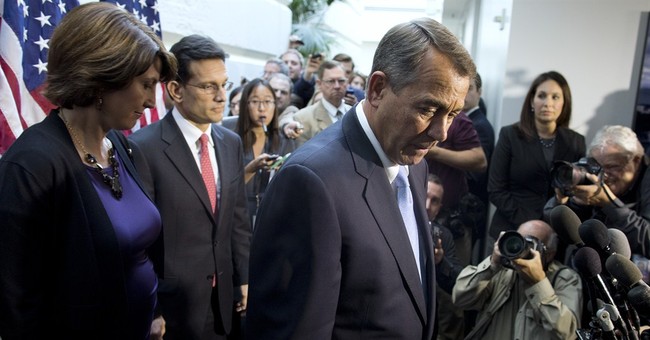
Losing to Barack Obama in 2012 shook the confidence of many Republicans and it's easy to understand why. After all, if you lose to the worst President in history, what does that say about you? Combine that with the frustrations so many conservatives have with the GOP and it's easy to write off the Republican Party.
However, it's often darkest before the dawn and many people are missing the fact that the GOP is well positioned to thrive over the next couple of decades.
1) We have the most potent grassroots movement in politics: The GOP has the Tea Party Movement, while the Democrats HAD the Occupy Movement. The Tea Party Movement is about small government, cutting spending, and sticking to the Constitution. The Occupy Movement was about demanding free stuff and avoiding taking baths for weeks at a time. The greatest moment for the Tea Party was the GOP's incredible success in the 2010 elections. The greatest moment for the Occupy Movement was when the occupiers were protesting Wall Street and a bunch of traders dumped hundreds of McDonald's job applications on them out of a window. The Tea Party Movement is still alive and kicking. The Occupy crowd eventually gave it up when the rich liberals stopped sending the protesters free food and they ran out of open space to poop in the city parks.
2) 2010 was the GOP's best year since 1948: It's funny to hear, "The Republican Party can't win anymore," when the GOP had its best year since 1948 less than three years ago. In the 2010 election, the GOP added 6 Senate seats, 63 House seats, and 680 seats in state legislatures around the country. Does that sound like a party that can't win any more? Does that sound like a party that's dying?
3) We should control the House at least until the next census: Not only does the GOP control the House, because of gerrymandering, we're likely to remain firmly in control until the next census. That will give us the capability to slam the brakes on government no matter what happens with the Senate and White House.
4) The party is thriving on the state level: The GOP is doing fantastic on the state level. We control 29 governorships and in the state legislatures, we control the upper chamber in 30 states and the lower chamber in another 28 states. That gives us a deep bench and proves the GOP can be not just competitive, but dominant as long as we play our cards right.
5) Our numbers with minorities are only going to go up: White Americans tend to vote Republican while black and Hispanic Americans tend to vote Democrat. Because demographically there are going to be more black and Hispanic Americans in the coming years, some people think that means the GOP is in deep trouble. Of course, that sort of thinking assumes the GOP will continue to get the same percentage of the black and Hispanic vote that it has always gotten. In actuality, since the GOP has done no outreach of significance in past years, we have every reason to think that our current numbers with minorities are a floor, not a ceiling. The GOP made its first real attempt to showcase minority Republicans during the last GOP convention and the RNC has just begun to pour serious money and manpower into minority outreach. It won't happen overnight, but our numbers with minorities are going to go up significantly in coming years.
6) Short Term: Obamacare means a strong 2014: All the GOP needs to do to have a great 2014 is hammer away relentlessly at Obamacare and highlight scandals like Fast and Furious, the IRS persecution of the Tea Party, and Benghazi next summer while taking care not to aggravate the base. If we do just those three things, we're practically guaranteed to pile on even more seats in the House and we'll have a better than even chance of taking back the Senate.
7) Barack Obama gives us a medium term opening: Barack Obama really is the single worst President in American history. The economy has been bad the entire time he's been in the White House; there are 10 million more Americans out of work than when he came into office. He's incredibly divisive, his foreign policy is in chaos, and his signature achievement is the Hindenburg of government policies. Conservatives have seen how bad he was from day one, but many other Americans are just starting to figure it out. After finally concluding that Democrats can't govern, the American people are going to be much more willing to give the GOP a chance to prove Republicans have what it takes over the next few election cycles.
8) Long term, the ground is very unfavorable to the Democrats: As Grover Norquist likes to say, the Democrats are made up of competing parasitic interest groups. So, when Democrats get into office, they immediately start doling out taxpayer money to their allies to keep them in line. Margaret Thatcher identified the coming problem with that strategy long ago when she said, "The trouble with socialism is that eventually you run out of other people's money." Unfortunately for all of us, we have a little too much socialism in this country and we are indeed running out of other people's money. This is bad for the country in general, but it's catastrophic for the Democrats whose entire electoral model is centered around recklessly spending money. The unions, which gulp down an inordinately large slice of the taxpayer pie, are already starting to pay the price. Their membership is down to its lowest level since the thirties and even liberal Meccas like Detroit are slashing their pensions down to nothing because they're out of money and have no other choice.
If we want out children to have the same opportunities and bright future that previous generations of Americans have grown up with, then this country needs a conservative Republican Party to dominate our political process over the next couple of decades. We're going to have the opportunity to save our country and the only question left is whether we're up to the challenge.
Townhall
Subscribe to:
Posts (Atom)
