October 31, 2012
By Richard F. Miniter
Between e-mail revelations and whistle-blower testimony, the Band-Aid is very painfully being pulled off the Obama administration's Benghazi disaster. And as in any management failure, we have two ways to look at the issue -- long-term and short. In the short-term view, we learn something about the quality of our actions -- i.e., was the right or most proper decision or sequence of decisions made based on the facts known at the time? But the benefit of the long-term view is that it may reveal failings in the way we organize ourselves for these occasions and, by extension, the likelihood of such a thing happening again.
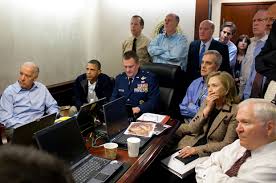
It's this long-term view of Benghazi which is so disheartening because it so obviously illustrates how we're set up to produce ever more situations similar to this one, wherein our people not only die expecting help, but die several hours after they had fixed a targeting laser on the mortar position which would eventually kill them. More tragedies wherein we have to listen to a political operative like Leon Panetta reference some completely fictitious military maxim that you never send a force in without knowing exactly what's happening on the ground. More calamities where what we don't hear is that someone like General Petraeus, who is supposed to be a soldier, ended his career by refusing to abandon his men -- indeed, wherein not even one man in the White House Situation Room, in uniform or not -- not one diplomat in the loop at State, not one senior CIA official, not one Naval officer offshore, not one serving general in the multitude of American commands in Europe would sacrifice his career in order to save them.
All this comes about because we have established -- indeed, raised to the order of religious dogma -- Max Weber's fanciful notion that in a bureaucracy, decisions should proceed as high as they can up the chain of command before being made. Indeed, apparently, doing this somehow improves the quality of the decision.
In consequence, the head honcho, Barack Obama, for however long he remains in office, and his successors get to decide everything -- whether or not Navy snipers can pull their triggers and rescue Captain Richard Phillips from pirates in the Indian Ocean, whether to launch Osama bin Laden's elimination inside Pakistan, or even whether or not a soldier shot down in front of a U.S. Army recruiting station by a jihadist trained in Yemen gets awarded the Purple Heart. Everything and anything of any consequence.
This is a very un-American idea which doesn't, over the long term, provide political cover, doesn't enable a fluid situation to be managed, but only breeds pusillanimity in the ranks. It fosters the caveat that "it's not my decision to make, not my responsibility -- it's the guy farther up the food chain. So whatever happens, it's not my fault."
It also entails delay, which is all by itself often fatal in these instances. Of course, we claim that delay is overcome with technology, by, for instance, streaming live video feed right into the White House. But can Barack Obama make a better tactical decision than the man on the ground? Usually he cannot. The argument that he can is often couched in terms of intelligence, the concept that he has a superior strategic vision because he has access to more information. Fine -- but what that means, especially in a president who skips his intelligence briefings, is that he has to gather that information. That is, call a meeting or let his national security chief do so, and so there is that delay again. In fact, these meetings in the midst of a crisis always entail delay, because these well-fed types in thousand-dollar suits ordering coffee from the hovering
White House steward are often lawyers, and lawyers typically counsel delay. But mostly they aren't the ones being shot at.
And so you get the phenomenon where the entire chain of command begins to focus on passing on only the information they believe will shorten the delay. For example, the debacle in Somalia (Black Hawk Down) during the Clinton years can be laid at the door of the command having to submit their operational plan to Washington for approval. Why? You've got professional soldiers educated and trained and obviously thought worthy of promotion from second lieutenant during those careers up through the Army's many rank levels of increasing responsibility, and they're on the spot. Can't they be trusted to plan and then execute a company-level operation?
The answer was no, and what they were forced to do was submit a detailed operational plan to Washington identical to one that had been nitpicked, adjusted, and agreed to before in the hope of having it approved in some timely fashion. But of course, this act in itself entailed great risk, because doing the same thing over and over again in exactly the same way is a recipe for disaster when faced with an observant enemy.
And it was a disaster. Brave, tough men carried through, but it was a disaster.
In his book Leading From Behind, my son (also named Richard) reports from sources inside the administration that the bin Laden raid was itself delayed three times, perhaps because political adviser Valerie Jarrett wouldn't advise the president to go ahead with it. But why should it be a White House decision at all? The president should have told the ground commander to get bin Laden whenever he could and let it go at that. The several months' period of delay during which bin Laden could have moved would have been avoided. We saw the same criminal delay in Carter's abortive Iran hostage-rescue raid. We see it in the eternal waffling over Iran.
Yet isn't the American way to make the decision at the lowest level possible and then back those leaders on the spot, no matter what the outcome, as long as it was evident that they were trying to do the right thing?
Isn't it the American way to trust our people?
We wouldn't tolerate any other approach from our local police. In fact, if they don't act on their own, they're liable to charges of cowardice.
Similarly, every commander of every ship, every post, every infantry company everywhere should have the authority and the requirement to defend himself or rescue our people without first having to ask permission, in triplicate, on the right form, with all the Ts crossed, countersigned by ten levels of command. Indeed not to have such a system of trust in place is in itself cowardice.
As to the matter of the short term, the Libyan debacle itself had more than enough yellow-belly soup sloshing around in it to paint the White House, Foggy Bottom, and the upper echelons of the CIA a bright canary, but the answer to the fundamental question of why it happened is the fact that we still have the same organizational structure, and way of thinking, which brought us Black Hawk Down.
Interestingly, when we examine the question of why the particular decisions about Benghazi were made the way they were, we have to dismiss the idea of politics. These people can't think that fast, and nobody in the White House those first few hours could have seen how it would play out. For all they knew, Secretary of State Hillary Clinton's subordinates might have been covering the Obama administration in glory, and the Chicago rule is, after all, "never let a crisis go to waste."
Instead, what must have happened is that the unfolding crisis struck an elemental force in the White House.
Some mindset which wouldn't book any contradiction, and it's not that difficult to figure out whose mind harbored that set. Take Barack Obama's iron determination never to offend the Muslim world -- never, that is, to underscore its weakness by making another boots-on-the-ground war in some part of it. He said as much on his original "apology tour" in Cairo; he demonstrated it in his abandonment of Iraq and via his determination to withdraw from Afghanistan -- not because it's a "worthless piece of dirt," as Colonel Ralph Peters so aptly described it, but simply because it's in his mind morally correct to do so. You can see it in one Ramadan dinner after another at the White House, his enthusiastic bowing, his description of the Muslim call to prayer as the most beautiful sound there is -- but most vividly, you see it in his refusal to allow American forces to participate in the aerial bombardment of Gaddafi's failing dictatorship.
Because Obama is determined upon an American realignment towards the Muslim world. In fact, if he has one fixed foreign-policy idea, I suspect that this is it.
So much so that the question of whether such a realignment is more a matter of perception than substance is unimportant. The question of whether or not it will lead to future gain is unimportant. The question of whether it will lead to greater security for Israel or Christian minorities in the Middle East is unimportant.
Even the cruel fate of our people in Libya isn't important. Instead, what is important in Obama's mind, what is the only issue of importance, is his deeply rooted conviction that he has to prove himself to these people.
That he owes them this gift.
And everybody in the White House knows that. Knows they can't dispatch a U.S. Marine infantry company from offshore to our ambassador's rescue, know they can't allow former SEALs in the CIA to launch a rescue mission or Delta Force people positioned in Italy to fly in. Knows that under no circumstances can they authorize anything except an anonymous drone looksee, because boots on the ground can't be tolerated. Not by the big boss upstairs in the family quarters busy packing for Vegas.
So the White House had to pretend that there was no military target. No armed and organized force to hit back against or drive off the scene. Simply a spontaneous mob incited once again by America's endless intolerance, manifested this time by some obscure video disparaging the prophet.
Yet how embarrassed and chagrined the sycophants in Barack Obama's Situation Room must have been by the heroics of two American former SEALs who disobeyed orders twice repeated, rescued whomever they could from the besieged consulate, and then died defending them. But how embarrassed and chagrined we should be at the leadership which let them die rather than stand up to Barack Obama. Because if the people among that leadership had but half the courage of those two Navy SEALs who disobeyed direct orders and saved the Americans at the consulate, Obama, with only weeks to go before his hoped for re-election, would have folded, because he is not a brave man himself -- only clever and calculating.
Indeed, what Benghazi teaches us is not only have we a faulty system of command, but that there aren't any men in Barack Obama's White House. Except of course those enlisted Marines he has in dress blues holding the doors open for his friends. They could have told him what to do and where to get off.
Richard F. Miniter is the author of The Things I Want Most, a former U.S. Marine, and a local chief of police. He can be reached at miniterhome@aol.com .
By Richard F. Miniter
Between e-mail revelations and whistle-blower testimony, the Band-Aid is very painfully being pulled off the Obama administration's Benghazi disaster. And as in any management failure, we have two ways to look at the issue -- long-term and short. In the short-term view, we learn something about the quality of our actions -- i.e., was the right or most proper decision or sequence of decisions made based on the facts known at the time? But the benefit of the long-term view is that it may reveal failings in the way we organize ourselves for these occasions and, by extension, the likelihood of such a thing happening again.
It's this long-term view of Benghazi which is so disheartening because it so obviously illustrates how we're set up to produce ever more situations similar to this one, wherein our people not only die expecting help, but die several hours after they had fixed a targeting laser on the mortar position which would eventually kill them. More tragedies wherein we have to listen to a political operative like Leon Panetta reference some completely fictitious military maxim that you never send a force in without knowing exactly what's happening on the ground. More calamities where what we don't hear is that someone like General Petraeus, who is supposed to be a soldier, ended his career by refusing to abandon his men -- indeed, wherein not even one man in the White House Situation Room, in uniform or not -- not one diplomat in the loop at State, not one senior CIA official, not one Naval officer offshore, not one serving general in the multitude of American commands in Europe would sacrifice his career in order to save them.
All this comes about because we have established -- indeed, raised to the order of religious dogma -- Max Weber's fanciful notion that in a bureaucracy, decisions should proceed as high as they can up the chain of command before being made. Indeed, apparently, doing this somehow improves the quality of the decision.
In consequence, the head honcho, Barack Obama, for however long he remains in office, and his successors get to decide everything -- whether or not Navy snipers can pull their triggers and rescue Captain Richard Phillips from pirates in the Indian Ocean, whether to launch Osama bin Laden's elimination inside Pakistan, or even whether or not a soldier shot down in front of a U.S. Army recruiting station by a jihadist trained in Yemen gets awarded the Purple Heart. Everything and anything of any consequence.
This is a very un-American idea which doesn't, over the long term, provide political cover, doesn't enable a fluid situation to be managed, but only breeds pusillanimity in the ranks. It fosters the caveat that "it's not my decision to make, not my responsibility -- it's the guy farther up the food chain. So whatever happens, it's not my fault."
It also entails delay, which is all by itself often fatal in these instances. Of course, we claim that delay is overcome with technology, by, for instance, streaming live video feed right into the White House. But can Barack Obama make a better tactical decision than the man on the ground? Usually he cannot. The argument that he can is often couched in terms of intelligence, the concept that he has a superior strategic vision because he has access to more information. Fine -- but what that means, especially in a president who skips his intelligence briefings, is that he has to gather that information. That is, call a meeting or let his national security chief do so, and so there is that delay again. In fact, these meetings in the midst of a crisis always entail delay, because these well-fed types in thousand-dollar suits ordering coffee from the hovering
White House steward are often lawyers, and lawyers typically counsel delay. But mostly they aren't the ones being shot at.
And so you get the phenomenon where the entire chain of command begins to focus on passing on only the information they believe will shorten the delay. For example, the debacle in Somalia (Black Hawk Down) during the Clinton years can be laid at the door of the command having to submit their operational plan to Washington for approval. Why? You've got professional soldiers educated and trained and obviously thought worthy of promotion from second lieutenant during those careers up through the Army's many rank levels of increasing responsibility, and they're on the spot. Can't they be trusted to plan and then execute a company-level operation?
The answer was no, and what they were forced to do was submit a detailed operational plan to Washington identical to one that had been nitpicked, adjusted, and agreed to before in the hope of having it approved in some timely fashion. But of course, this act in itself entailed great risk, because doing the same thing over and over again in exactly the same way is a recipe for disaster when faced with an observant enemy.
And it was a disaster. Brave, tough men carried through, but it was a disaster.
In his book Leading From Behind, my son (also named Richard) reports from sources inside the administration that the bin Laden raid was itself delayed three times, perhaps because political adviser Valerie Jarrett wouldn't advise the president to go ahead with it. But why should it be a White House decision at all? The president should have told the ground commander to get bin Laden whenever he could and let it go at that. The several months' period of delay during which bin Laden could have moved would have been avoided. We saw the same criminal delay in Carter's abortive Iran hostage-rescue raid. We see it in the eternal waffling over Iran.
Yet isn't the American way to make the decision at the lowest level possible and then back those leaders on the spot, no matter what the outcome, as long as it was evident that they were trying to do the right thing?
Isn't it the American way to trust our people?
We wouldn't tolerate any other approach from our local police. In fact, if they don't act on their own, they're liable to charges of cowardice.
Similarly, every commander of every ship, every post, every infantry company everywhere should have the authority and the requirement to defend himself or rescue our people without first having to ask permission, in triplicate, on the right form, with all the Ts crossed, countersigned by ten levels of command. Indeed not to have such a system of trust in place is in itself cowardice.
As to the matter of the short term, the Libyan debacle itself had more than enough yellow-belly soup sloshing around in it to paint the White House, Foggy Bottom, and the upper echelons of the CIA a bright canary, but the answer to the fundamental question of why it happened is the fact that we still have the same organizational structure, and way of thinking, which brought us Black Hawk Down.
Interestingly, when we examine the question of why the particular decisions about Benghazi were made the way they were, we have to dismiss the idea of politics. These people can't think that fast, and nobody in the White House those first few hours could have seen how it would play out. For all they knew, Secretary of State Hillary Clinton's subordinates might have been covering the Obama administration in glory, and the Chicago rule is, after all, "never let a crisis go to waste."
Instead, what must have happened is that the unfolding crisis struck an elemental force in the White House.
Some mindset which wouldn't book any contradiction, and it's not that difficult to figure out whose mind harbored that set. Take Barack Obama's iron determination never to offend the Muslim world -- never, that is, to underscore its weakness by making another boots-on-the-ground war in some part of it. He said as much on his original "apology tour" in Cairo; he demonstrated it in his abandonment of Iraq and via his determination to withdraw from Afghanistan -- not because it's a "worthless piece of dirt," as Colonel Ralph Peters so aptly described it, but simply because it's in his mind morally correct to do so. You can see it in one Ramadan dinner after another at the White House, his enthusiastic bowing, his description of the Muslim call to prayer as the most beautiful sound there is -- but most vividly, you see it in his refusal to allow American forces to participate in the aerial bombardment of Gaddafi's failing dictatorship.
Because Obama is determined upon an American realignment towards the Muslim world. In fact, if he has one fixed foreign-policy idea, I suspect that this is it.
So much so that the question of whether such a realignment is more a matter of perception than substance is unimportant. The question of whether or not it will lead to future gain is unimportant. The question of whether it will lead to greater security for Israel or Christian minorities in the Middle East is unimportant.
Even the cruel fate of our people in Libya isn't important. Instead, what is important in Obama's mind, what is the only issue of importance, is his deeply rooted conviction that he has to prove himself to these people.
That he owes them this gift.
And everybody in the White House knows that. Knows they can't dispatch a U.S. Marine infantry company from offshore to our ambassador's rescue, know they can't allow former SEALs in the CIA to launch a rescue mission or Delta Force people positioned in Italy to fly in. Knows that under no circumstances can they authorize anything except an anonymous drone looksee, because boots on the ground can't be tolerated. Not by the big boss upstairs in the family quarters busy packing for Vegas.
So the White House had to pretend that there was no military target. No armed and organized force to hit back against or drive off the scene. Simply a spontaneous mob incited once again by America's endless intolerance, manifested this time by some obscure video disparaging the prophet.
Yet how embarrassed and chagrined the sycophants in Barack Obama's Situation Room must have been by the heroics of two American former SEALs who disobeyed orders twice repeated, rescued whomever they could from the besieged consulate, and then died defending them. But how embarrassed and chagrined we should be at the leadership which let them die rather than stand up to Barack Obama. Because if the people among that leadership had but half the courage of those two Navy SEALs who disobeyed direct orders and saved the Americans at the consulate, Obama, with only weeks to go before his hoped for re-election, would have folded, because he is not a brave man himself -- only clever and calculating.
Indeed, what Benghazi teaches us is not only have we a faulty system of command, but that there aren't any men in Barack Obama's White House. Except of course those enlisted Marines he has in dress blues holding the doors open for his friends. They could have told him what to do and where to get off.
Richard F. Miniter is the author of The Things I Want Most, a former U.S. Marine, and a local chief of police. He can be reached at miniterhome@aol.com .
American Thinker


